Why We Resist Standard Measurements in Daily Life
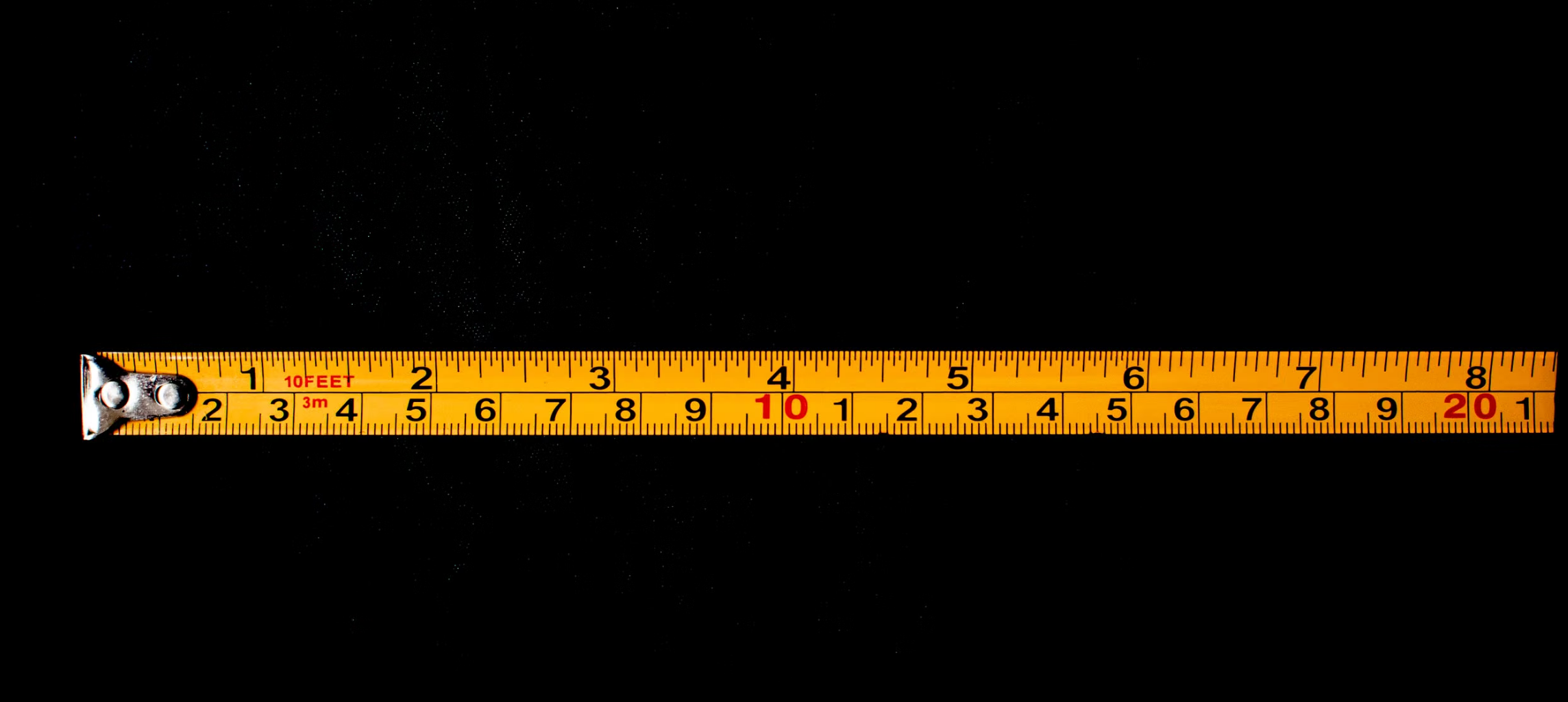
Today I was browsing a tech forum and came across a post: since browsers already have all kinds of plugins that auto-translate foreign languages, why hasn't anyone designed a plugin that converts all the measurement units on a webpage into one unified system?
The comments exploded into chaos. Someone complained about losing their mind over "8 tablespoons of celery" in an English recipe; someone else dragged out the old story of NASA's Mars Climate Orbiter crashing in 1999 because imperial and metric units weren't converted; and a few seriously defended the imperial system, arguing that base-12 is easier to divide than base-10. One joker even said, just think of it as about 0.0000035 trucks. Reading it all, I couldn't help thinking: this is not that simple.
We do have standard measurements. Quite the opposite—the standard units humanity has are frighteningly precise: the metre is now defined by the speed of light, and the second is pinned to caesium atoms. But back in daily life, we simply don't like using them. In the kitchen we use cups and spoons instead of a scale; in the news we say "the size of 5 football pitches" rather than 7,140 square metres; someone in debt says they owe "a buttload of money"; a taxi driver taking you home says "just two taps on the gas"; and then there's the eternally mysterious "I'll be there in a minute".
Why?
Born of the Heavens
To answer that, we first need to see where standard units came from. Here's an easily overlooked fact: the earliest "standard units" of humankind were born of the heavens themselves.
During the French Revolution, scientists were fed up with every province using its own "feet" and "cubits", and decided to invent a unit that belonged to no king and would never change. Their idea was to ask the Earth for help: cut the meridian running from the North Pole through Paris to the Equator into ten million parts, and one part is one metre. To measure that number, two astronomers spent seven years amid the chaos of war, triangulating their way from Dunkirk to Barcelona.
The whole logic cascades from there: the metric system is essentially an "ecological model of the Earth".
- Length (the metre) comes from the Earth's waistline;
- Volume (the litre) is a cube with 10 cm sides;
- Weight (the kilogram) is the mass of one litre of pure water at 4°C;
- Temperature (Celsius) is the freezing and boiling points of water under the Earth's atmospheric pressure;
- Time needs no explanation: the day comes from the Earth's rotation, the month from the phases of the Moon, the year from the Earth's orbit around the Sun, and even the "second" was originally 1/86,400 of a day.
Standards anchored to the heavens and the Earth are accepted without any resistance—taken for granted, no question asked. The ancient Chinese divided the day into twelve double-hour periods; the West uses a 24-hour clock; the 360 degrees of a circle are generally believed to come from the Babylonians' base-60 system and their observation of the Sun's annual path. Different civilisations arrived at the same choices because they share the same sky and stand on the same Earth. These "standards" are less man-made rules than notes humanity took on the motion of the heavens.
So the problem is not "standards" themselves, but what happens to them once they come down from heaven to earth.
Standards Cannot Escape Historical Accident
The best example: the width of a Roman chariot was set by the hindquarters of two horses. Cart wheels wore deep ruts into the stone roads, and later wheels had no choice but to fit those ruts. When the British built railways, they simply inherited the cart gauge—1,435 mm, or 4 feet 8.5 inches. America copied the British gauge, and when oil from Pennsylvania's fields had to be moved by rail, the 42-gallon whiskey barrel—the size that best fit the wagons—became "a barrel", a unit still in use today. And later still, NASA's space shuttle solid rocket boosters had to be built in Utah and shipped by rail to Florida, so their diameter ended up constrained by the width of the tunnels along the way. The most popular version of the story: the dimensions of humanity's most advanced spacecraft were decided two thousand years ago by the hindquarters of two horses.
I first read this story in popular-science books as a child and still find it fascinating. It shows how a standard, once locked in by historical accident, is passed down like a gene, even after the original reason has vanished. The foot is said to be the length of some king's foot (Henry I, according to one account). And the word "ounce" is even more absurd: 31.1 g in troy weight, 28.35 g in avoirdupois, 29.57 ml behind a US bar, 28.41 ml in Britain—and in the circuit-board industry it somehow became a unit of thickness: spread 1 ounce of copper evenly over one square foot and you get a layer about 35 micrometres thick, known as "1 oz copper".
A unit used for weighing gold ended up as the thickness unit for PCB substrate, with copper's density implicitly bundled in. This kind of "unit drift" could only have been invented by someone who was drunk.
The most expensive tuition ever paid for a unit conversion failure was NASA's Mars Climate Orbiter in 1999. Lockheed Martin supplied data in imperial units; NASA calculated in metric; the spacecraft entered the Martian atmosphere at too shallow an angle and broke apart—about $125 million gone. So the commenters' worry that "automatic unit conversion in browsers will go wrong" is hardly paranoid. During my years as a sysadmin, units were what I dreaded most in English documentation: the same word "pound" could mean currency or weight, and after an automatic replacement you'd end up with news like "bus fares rise from 1.50 kilograms to 1.70 kilograms".
The Pitfalls of Standard Units Themselves
If what I described above is standards being polluted by history, then there are also standard units that were simply never designed with ordinary people in mind.
The decibel is the classic case. It's a logarithmic unit: from 50 dB to 60 dB, the number only grows by 10, but the acoustic energy increases tenfold; from 50 to 70, a hundredfold. When you buy a range hood, the seller lists "quiet mode: 50 dB, powerful mode: 60 dB"—they sound similar, but once you get it home, one is comfortable cooking and the other is a plane taking off. Earthquake magnitude is also logarithmic—one notch up means roughly 31.6 times the energy—but everyone "gets" it, because we have physical memories of lamps swinging, walls cracking and buildings collapsing; the decibel has no such memories, which is why we've been fooled by number games for so long. Science's original intention was to compress the trillion-fold range of acoustic energy the human ear can perceive into a readable table; the result was grinding consumers' intuition into the ground.
The farad is absurd too. By definition it's coulombs per volt, and the scale is so oversized that real-world capacitors all live in microfarads, nanofarads and picofarads—10⁻⁶, 10⁻⁹, 10⁻¹². The "beautiful unit" scientists conjured up in their offices for the sake of tidy formulas keeps engineers patching things up every day.
Then there's the candela. It's one of the seven SI base units; its name comes from the Latin for "candle", and it originally meant "the brightness of one candle"—how intuitive. But the modern definition redefined it as "the luminous intensity, in a given direction, of a source emitting monochromatic radiation of frequency 540×10¹² Hz with a radiant intensity of 1/683 watt per steradian"—pure gibberish. You never see candela in daily life: you buy bulbs by lumens, phones by nits, desk lamps by lux. The base unit closest to "light" has been hollowed out by its own derived units.
Three Faces of Non-standard Units
After all these complaints about standard units, let's get back to life itself. The "non-standard" units of daily life actually serve legitimate functions. I'd group them into three types.
Volume Units in the Kitchen
It's indeed maddening to see "8 tablespoons of celery" in an English recipe, but why do American recipes prefer volume units? Because a loosely scooped cup of flour weighs very differently from a packed one, and a tablespoon of coarse salt has a different mass from fine salt. When density is uncertain, volume can't be directly converted into weight. Europeans solved the problem by printing both millilitres and grams on measuring cups, but celery chopped coarsely or finely still changes the volume. In the end, "one tablespoon" is closer to what actually happens in the kitchen than "15 grams"—you have a spoon in your hand, not necessarily a scale. Mock it all you like; the system is self-consistent within its own context.
Visual Units in Documentaries
Documentaries and the news love to translate abstract numbers into "visual imagery":
| What | Standard form | Media form |
|---|---|---|
| Steel | ~10,000 t | 1 Eiffel Tower |
| Land area | ~7,000 m² | 1 standard football pitch |
| Water volume | ~14 million m³ | The volume of West Lake |
| Destructive power | ~15 kt TNT | 1 Hiroshima bomb |
| Micro precision | 0.07–0.1 mm | 1 strand of hair |
| Long distance | 120,000 km | 3 times around the Earth |
| Area | 105,500 km² | 1 Zhejiang province |
These units carry cultural memory and emotion. The Eiffel Tower carries a sense of history, the Hiroshima bomb carries fear, a strand of hair carries wonder. Standard units are neutral and emotionless; visual units are loaded with emotion. Documentaries convey not just data but emotion. Every culture also has its own "local rulers": China uses West Lake and Zhejiang province, America uses Lake Michigan and Rhode Island, Britain uses Wales. This shows that intuition about scale must be built on shared cultural memory—exactly what standard units cannot provide. I do the same when explaining science to my kids: "this whale is as long as 5 buses" and they get it instantly; say 25 metres and they just stare blankly. When I was a child watching wildlife documentaries, it was the same—only "the size of three football pitches" could get through to me.
A Buttload of Debt and Two Taps of the Gas
This is the best part. Scientists assume humans need units for precise calculation; the media assume we need them for vivid imagination; but most of the time, ordinary people use units just to vent: someone in debt says "a buttload of debt", someone waiting says "the flowers have withered while I waited"—nobody cares about the exact amount of money or minutes. When a man from Northeast China says "just two taps of the gas and we're there", what he means is "it's ten kilometres, but I'm driving you, so don't feel obligated"—here the unit is not measurement but rhetoric. Even diplomatic language can't escape it: when Israel says the UN "no longer has an ounce of legitimacy", that "ounce" carries the ferocity of "cut it into a thousand, ten thousand pieces, and you're not worthy of the smallest one"; say "not a gram of legitimacy" instead, and it instantly becomes a lab report.
The Body as a Ruler
If the three faces above are about convenience, the next reason is closer to instinct: using the body as a ruler.
The ancient Chinese ruler was literally the body. Stretch out your hand and the distance from thumb to middle finger is a "handspan"; extend both arms and it's an "arm span"; the "跬" (half a step) in the proverb "不积跬步,无以至千里" (without piling up half steps, one cannot walk a thousand li); a bowl of water, the time it takes for an incense stick to burn—all refer to things at hand. When I was a child back home, adults never used rulers: a span and a half, two spans—"is it a full arm span?"—everything was measured by the body.
This "body-ruler" logic holds worldwide, and the defence of imperial units rests on the same logic. The foot comes from a foot, the inch from a thumb; base-12 divides better than base-10: 10 is divisible only by 2 and 5, while 12 is divisible by 2, 3, 4 and 6. A carpenter with a rope can fold it into halves, thirds and quarters and get whole numbers: half a foot is 6 inches, a third of a foot is 4 inches—whereas a third of a metre is 0.333… metres, never ending. It's the same in the kitchen: halve a gallon and you get half a gallon; halve it again and it's a quart; again, a pint; again, a cup. Fahrenheit is defended on the same grounds: 0°F is biting cold and 100°F is scorching hot—exactly the range of human comfort—whereas 0 to 100 in Celsius is the story of water, nothing to do with people. "Why should the boiling point of water decide whether I wear a coat today?"
There's some truth to this, but it explains "intuition", not "standards". The imperial system is a system of measurement centred on the human body; the metric system is centred on the Earth and the universe. The former is indeed closer to hand, the latter better for collaboration. The problem is that the modern world has made the latter the default language, and because of the influence of the West's modern industry and technological revolution, we often have no choice but to use those awkward units too.
Business Turns Units into Magic Props
If it were only chaos, we could tolerate it. What's more annoying is that some units are deliberately kept non-standard, because non-standard is good for business.
Phone and TV screen sizes are the textbook case. Why do they always quote a diagonal like "6.7 inches" instead of the area? Because a one-dimensional number is easier to spin. 6.7 inches sounds bigger than 6.5 inches, but consumers can't work out the real difference in area; add a unit like "inch", which almost nobody has intuition for, and the number game leaves no trace. Nits are the same: vendors tout "peak 4,500 nits"—nobody knows what that means, only that it's bigger than "2,000 nits", and bigger means more premium. To be honest, to this day I can't tell you the real difference between 600 nits and 1,000 nits; I only know the bigger number costs more. But what consumers really want to ask is "can I see the screen clearly in direct sunlight?"—a question no spec sheet answers.
Look at the office, and Word is full of the same measurement mess: A4 paper has a √2 aspect ratio, a properly metric design, yet its actual dimensions are the odd-looking 21 × 29.7 cm; the "No. 3" font size is the Chinese letterpress system's conversion of the European "point" (1/72 inch)—No. 3 is about 16 points, but if you pair No. 3 text with 16-point line spacing, you'll find the two lines are virtually touching. Meanwhile everyday layout jumps between points, centimetres and character counts, and most of the time you just eyeball it and hope it doesn't look too wrong.
Using "K" for salaries follows the same logic. The Chinese tradition counts in groups of four digits, so "万" (10,000) is the natural unit; but people now say "a 3K monthly salary" instead of "0.3 万", because monthly salaries fall in the 3,000–30,000 range: with "K" you stay in the comfortable integer band of 3–30, while "万" drags in decimals like 0.3 or 0.8. The choice of units obeys cognitive comfort first, and "standards" second.
The AI era has also given birth to a new "monster of scale": the token. In the early ChatGPT days, one token was roughly half a Chinese character and a conversation consumed a few hundred to a few thousand tokens—still vaguely perceptible. Once agents started running at scale, you press Enter (an intent of a few dozen tokens) and behind the scenes the agent thinks, decomposes steps, self-corrects and re-reads context, burning through hundreds of millions of tokens. When a unit routinely needs prefixes like "million" or "billion" attached, it loses its meaning as a measurement. "Used 500 million tokens today" and "5 trillion tokens" are equally incomprehensible bookkeeping. I wrote some thoughts on AI not long ago in Paper, Pencil, and AI , and a point there applies here too: tools don't change the units; they change what we decide is worth caring about.
A Scientific Ruler and a Tongue Ruler
Last, the most mysterious of all: spiciness.
Science has actually built a precise ruler for spiciness. In 1912, pharmacist Wilbur Scoville invented the SHU (Scoville Heat Unit) using a delightfully crude method: dilute chili extract with sugar water, have five tasters sample it, and keep diluting until three of them can no longer taste the heat—the dilution factor is the SHU value. Bell peppers score 0; Naga Viper peppers score about 1.38 million; the widely circulated comparison tables mark pepper spray at up to 2 million, and pure capsaicin at 16 million. This unit carried the gene of the tongue from birth: it wasn't measured by an instrument, it was tasted by humans.
But however precise the numbers, they can't save reality: nobody has any idea what the difference between 50,000 SHU and 500,000 SHU feels like. So people invented their own scale—"mild, lightly spicy, medium, hot, extra hot"—and even then, Hunan's "mild" and Guangdong's "extra hot" may belong to completely different systems. When a Cantonese person orders "mild" spice, they mean "please, don't let me feel any heat"; when a Hunan chef hears "mild", they understand "this guy can't take spice—throw in a smaller handful of wild peppers". I've lived in Guangdong for nearly twenty years, and when relatives from my hometown in Hunan come to eat in Foshan, the first thing they always do is tell the owner "don't make it mild the Guangdong way". On this question, SHU values won't save you. All you can do is ask, honestly: boss, is your "mild" a Cantonese mild or a Hunan mild?
Two Systems of Measurement
Back to the original post. Browser auto-conversion of units sounds thoughtful, but in practice it would almost certainly fail: is "pound" currency or weight? How do you convert "a meteorite the size of three washing machines" into tonnes? What multiplier do you use for "the weight of 1.5 blue whales"? Because units are never just numbers; they carry cultural memory, bodily intuition and emotion. Standards give civilisation the order of collaboration: the metre, the kilogram and the second let engineers all over the world connect seamlessly—that is the metric system's greatest achievement, beyond dispute. And the "non-standard" units keep the texture of life itself: a teaspoon, a pinch of salt, two taps of the gas, a buttload of debt, five football pitches.
Humans are curious creatures: spiritually, we define rules on the scale of the universe and the Earth; physically, we still perceive life with our own palms and eyes. Standard units manage collaboration; non-standard units manage the warmth of everyday life. That the two systems coexist is less a flaw of civilisation than its wisdom—after all, if even "mild" had to be labelled with an exact SHU value, life would be measured a little too precisely.