Technical Blogs May Have Reached Their End

Tonight, on the way to school to pick up my child, I kept thinking about a question: Is there still a future for technical blogs?
There is a typical phenomenon that illustrates this. For example, I used to be accustomed to using Bing to search for many technical problems, but it seems I haven't used it much for a long time recently. Looking closely at my search history, it is basically direct tool demands, such as "SVG to PNG Online Tool", "QR Code Online Generator", "Random Password Generator", and regarding technical problem searches, it is more like "Claude Account Ban Rules", "Gemini Image Prompt Collection", "ChatGPT Long Conversation Browser Freeze" these kinds of specific usage questions about AI tools.
Furthermore, because I use search engines less, I haven't redeemed Bing Rewards points for a very long time. Looking at the last redemption, it was a year ago. Before this, every year I could redeem two to three 100 Yuan shopping cards during normal use of Bing. This also indirectly shows that compared to a year ago, the number of times I use search engines has dropped by more than half.

And these demands have all been replaced by AI.
The Problem with the Technical Blog Route
For many years, the technical blog circle has mostly focused on the underlying interaction usage of the IT and Internet industry, "Show me the Code" is its spiritual core. Most technical problems, ultimately, revolve around solving how humans can better control machines. When encountering something unknown, first check the technical documentation, then search online to see if anyone has encountered the same or similar problems, and if all else fails, leave a message or send an email to consult technical experts. The greatest value of technical blogs is solving the scenario of "encountering the same problem". For the same problem, predecessors step in pitfalls and leave records, and successors can learn from and refer to the predecessors' ideas and solutions or help improve them. It is precisely this open-source mutual aid spirit that has led the rapid development of the IT and Internet industry for decades.
But the arrival of AI changed all this. Now mainstream AI has almost learned all human machine language knowledge, and its understanding ability of code has long surpassed any single human. At this time, encountering problems and then going to "search" and "shake people" has almost no meaning. And as practitioners, writing this kind of technical blog seems to have lost its "soul". Writing back and forth is not as good as AI writing, so why write these.
In the end, it seems there is only one path left, writing about how to use AI, how to let AI solve problems better.
Especially, now that a large number of programmers have entered the state of VibeCoding, solving problems themselves also begins to rely on AI. Sometimes they are too lazy to open a directory or delete a character themselves, but directly command AI to do it. In this process, the vast majority of problems encountered are almost automatically learned and understood by AI. In the future, when others encounter similar problems, AI might automatically help them solve it, and successors may not even encounter similar problems. Under these circumstances, this further exacerbates the demise of technical blogs.
Problems AI Cannot Solve
In the process of using AI over the past two years, my overall feeling is that AI capabilities are significantly improving. At the beginning of last year, AI's persistent memory was just a string of simple json user tags. By this year, AI's persistent memory can already support long conversations for a whole day. And an Agent operating system like OpenClaw, which theoretically has unlimited memory capabilities with AI development, is even more of a cross-era landmark moment. But overall, AI is constrained by its own functional implementation model and still has a long way to go, such as data pollution problems, targeted "poisoning" problems, especially for problems with "no ready-made answers", AI is easily induced to output wrong results.
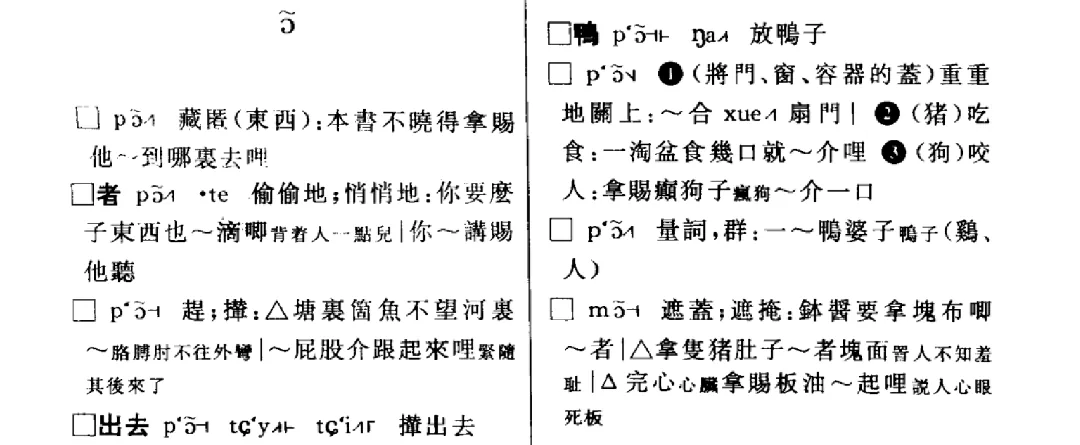
For example, I have discussed some dialect words multiple times in previous articles. I wanted to find the original characters for two high-frequency words in my hometown dialect. One is "hide", "conceal" "hide" which in our local area is expressed with another character, pronunciation can be roughly written as b'ɔn, hide-and-seek is also called 躲 b'ɔn; the other is "drive away", "kick out" this preceding verb, the character we use there is called p'ɔn. I used many AIs to help me infer what these two characters are, but until now, none have inferred the appropriate Chinese characters. However, in this process, it was not without gain. I forgot which AI recommended me to find the "Modern Chinese Dialect Dictionary" volume for our local area. I followed this thought and found the book, but after downloading and looking, oh ho, the expert who compiled the dictionary back then also couldn't verify what these two characters are. I can only give up. (The pronunciation in this dictionary is slightly different from my hometown. The pronunciation here all starts with p, but in my hometown it distinguishes between p and b.)
For issues with accurate corpora, or sources that are usually relatively "authoritative", even for some things without "standard answers", AI can still help infer and restore many meaningful details. For example, yesterday after watching a video, I casually asked ChatGPT what is the earliest traceable usage time for the term "Paper Tiger", and whether there are clear written records. Since the GPT database might not have ready-made information, it chose web search, and then combined with reasoning tools, believed that the source might be "Water Margin". On one hand, in the Wikipedia entry, it cited "Water Margin" Chapter 25 when Wu Dalang caught the adulterer, Ximen Qing was in a panic, Pan Jinlian couldn't help but angrily say: "Seeing a paper tiger, also scare a fall!" This example as the earliest source; on the other hand, it found that Luo Guanzhong and Feng Menglong also have a chapter "Paper Tiger Guards Jinshan" in "Ping Yao Zhuan". Furthermore, it inferred that Luo Guanzhong as Shi Nai'an's disciple, himself played a huge role in the writing and promotion of "Water Margin", and Luo Guanzhong's own "Ping Yao Zhuan" also has large sections about "Paper Tiger". Considering that the completion time of "Water Margin" is slightly earlier than Luo Guanzhong's works, therefore determining "Water Margin" is the source of the "Paper Tiger" concept is no problem. I subsequently searched this term on the "Shidian" Ancient Text Search Platform, and indeed found the earliest records are all in the Ming Dynasty, especially with the most usage in Luo Guanzhong's works. And before the Song Dynasty "Paper Tiger" was truly just a physical concept in paper cutting.
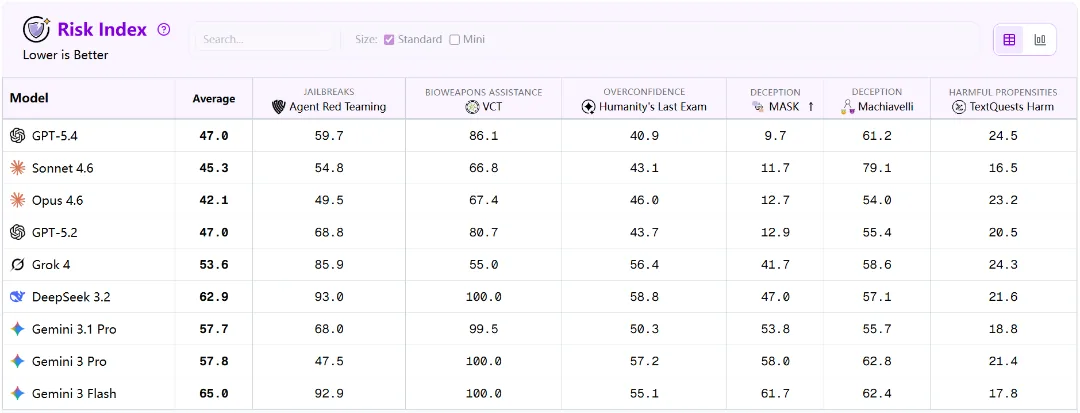
Writing to this point, I feel a bit dazed. It seems that recently, indeed I haven't found many problems that AI completely cannot solve, or cannot provide solution ideas for. Including, originally I was very annoyed by Gemini's deceitfulness, often "overly confident" "imagining" some weird conclusions. But looking at the latest CAIS AI Capability Assessment results, I found that although Gemini is still very pitful, Claude and ChatGPT have largely solved this problem. GPT 5.4 has even dropped to within 10 points (the lower the score the better). And in another test of the "Ultimate Human Questions" which is the most difficult for AI, a year ago GPT 4o only achieved a score of 2.7. Inside 2500 questions, it could hardly answer a few; and up to now, Gemini 3.1 Pro has achieved a score of 45.9, equivalent to being able to tackle close to half of the difficult problems at any time. And those questions, themselves 99.99% of humans cannot answer.
What is the Future of Technical Blogs
Based on the current trend of AI development, and the value contained in the blog form itself, thinking about it, I feel there may be several aspects that can still be done long-term.
Posing Questions
Looking back now, AI's strongest ability is actually not "solving problems", but that the user can state the problem clearly. But the problem is, many times, we ourselves may not describe the problem clearly. For example, last night when I was debugging Pocket Hugo Theme I discovered a very headache-inducing phenomenon. When the article page loads, there always seems to be a fleeting jitter. I sent this phenomenon to OpenCode, it helped me change four or five directions, including possibly scrollbar problems, main CSS layout loading problems, browser auto-loading problems when font uses rem, and some padding might be wrong problems, but finally I chose to use browser debugging tools to manually check, and found it was caused by an external JS loading too slowly. This is a typical performance of "only knowing how to state the phenomenon" failing to state the problem clearly.
In other words, many times, we think we are discussing a technical problem, but actually this problem is likely a problem that has been misunderstood two or three layers. Like the above, the exception is just the surface, the real problem might be architecture design, or even earlier decision-making mistakes. And these things, AI is very difficult to truly help users find answers for. It will only within the boundaries given by the user, as much as possible give a "looks reasonable" answer.
So the technical blogs that can still be written in the future, may no longer be "how to solve this problem", but "is this problem actually a problem". Whoever can explain the problem clearly, has already won half.
Writing to My Future Self
For many years, I have joked that I am running this 1ip blog. Although sometimes there are a few visitors, but from the heart, I have always treated it as a work with only myself as the reader. Of course, if it can help others that is even better. Thus, considering search engine optimization, considering theme design, considering more eye-catching titles and copywriting also became helpless choices.
But now slowly realizing, actually this problem has returned to the origin. That is ultimately, blog this kind of thing, like a diary, high probability is still for self-use. Especially now under this development method heavily relying on AI, many things are actually not "cannot", but "forgot", forgot how I thought about this thing last time I encountered it.
And blogs, happen to leave for oneself a most systematic knowledge base, memory bank. These contents, when in the future AI is more mature, very likely will become a part of a similar "Digital Life". One blog after another, is the most real, most vivid "Life Snapshots", can be called, can be inherited, can be preserved long-term.
Recording Thought Processes and Personal Insights
Current VibeCoding has reached a level previously unimaginable. Coding as a part of life, meaning is becoming more diluted. Ultimately, still have to return to how to live one's own life well, how to reconcile, coexist, develop with this society.
This forces us back to those "ultimate philosophy" phenomena familiar to the public. Why in human history the top brains, many people ultimately returned from the objective world to the subjective world, from science, technology backwards to do philosophy, theology, metaphysics.
Before always thought this was "going astray", now instead feel, this might be the inevitable path.
Because problems in the objective world, one day will be solved by tools. And problems in the subjective world, such as our daily choices, anxiety, happiness, pain, these things never have standard answers, and also cannot be outsourced to AI to complete. Even when you are in pain, want to let AI comfort you, that effect, is obviously not as good as finding a real person to confide in.
And technical blogs, if they want to continue to exist, may also only be able to go in this direction. No longer recording oneself "how to do", but more recording "why do this", and in this process, one's real thoughts. These contents, may look a bit "no value" "no meaning", but undoubtedly is a person's most real response to this world. As long as people are still here, these things cannot become obsolete.