Fuel is Too Expensive, Planning to Switch to a Pure EV, but Not Sure What to Choose
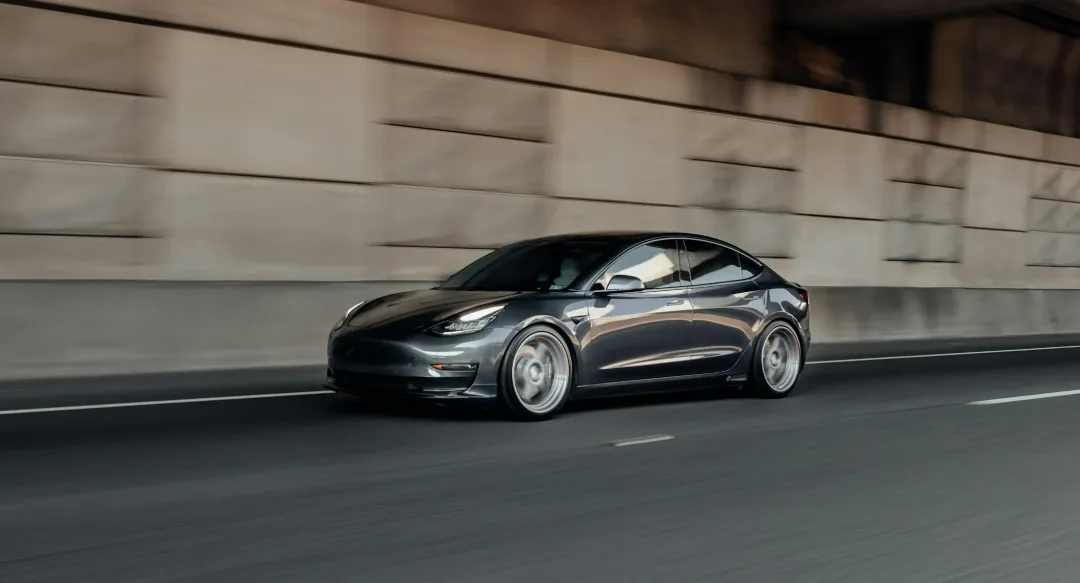
Lately, every time I pull into a gas station, my heart bleeds. Watching the fuel meter jump, I finally made up my mind: it’s time to say goodbye to internal combustion engines and switch to a pure electric vehicle.
However, the process of choosing a car has been far more agonizing than I imagined. I meticulously studied almost every mainstream pure EV priced from tens of thousands to three or four hundred thousand RMB, watched countless video analyses and spec comparisons, yet I still had no idea where to start. Later, my wife suggested that we simply sell our current car first and buy a new one with whatever we get for it. After going through that ordeal, I realized that selling a car is also a massive pitfall.
While dealing with car dealers to sell the car, my wife mentioned that her colleague's Mazda EZ-6 looked quite nice, so I went online to check it out. To be honest, when I was looking for cars before, I hadn't paid any attention to foreign brands other than Tesla. As a result of my search, I stumbled upon some Quora pages. Once I started browsing, I couldn't stop; I ended up logging into an account I hadn't used in 10 years and wrote a few answers.
How will Jaguar convince its traditional petrol-head customers to buy into a completely electric, ultra-luxury future?
My wife recently started looking for a new car. She was initially drawn to the Mazda EZ-6 because a colleague of hers bought one. Its design is undeniably stunning—sharp, futuristic, and sleek.
As a car enthusiast, I was confused. Mazda? Renowned for the "Jinba Ittai" (horse and rider as one) handling of the MX-5 and RX-7? Since when did they become a leader in EVs?
I did some digging, and the "Oho!" moment arrived: The Mazda EZ-6 is essentially a rebadged Deepal SL03. Mazda, despite its heritage, lacked the R&D capability to build a competitive EV on its own. They had to turn to their Chinese partner, Changan Automobile, who assigned their sub-brand, Deepal, to handle the engineering.
The irony is palpable:
- The Mazda EZ-6 sold about 19,182 units in China last year (ranked #155 in NEV sales).
- Its "twin," the Deepal SL03, only sold 14,000 units.
- However, the Deepal SL03 is just the baseline. Its siblings, the Deepal S05 and S07, are both in the Top 100, selling 102,000 and 61,000 units respectively.
If you ask me how a Mazda EZ-6 feels, I’d say it feels "weird." It’s a Japanese body with a Chinese heart. But here is the cold truth: If Mazda didn't have this car, they wouldn't even be at the "New Energy" table. And if you aren't at the table in 2026, you don't have a seat in the future.
Now, look at Jaguar.
Jaguar is facing the exact same existential crisis. They’ve announced a pivot to an "Ultra-Luxury" all-electric brand, with cars starting at $130,000 to $150,000. They want to compete with Bentley and Aston Martin.
But where is the technology coming from? In June 2024, JLR signed a strategic deal to use Chery’s E0X electric platform (the same one powering the Exeed Exlantix and Huawei’s Luxeed). Just like Mazda, Jaguar is effectively "borrowing a soul" from a Chinese manufacturer to stay alive.
How competitive is the Chinese market compared to the US/Europe?
Five years ago, my wife purchased a Lexus ES200 for 360,000 RMB (approximately $50,000 USD). This is a somewhat "peculiar" model, primarily sold only in China and a few parts of Eastern Europe. It is equipped with a 2.0L naturally aspirated engine, achieving 0-100 km/h in a sluggish 12 seconds. It was sarcastically nicknamed "The Highway Lightning" on Chinese social media for being notoriously slow. Why didn't we buy the more powerful ES300h hybrid version back then? Because it was a seller's market; the ES300h cost 450,000 RMB, and dealers even demanded substantial markups (additional fees) on top of that.
Fast forward to today, the car has done 70,000 kilometers, and my wife wants to trade it in. Before we look at new options, let's talk about its residual value. I finally sold it for 140,000 RMB, which is only 38.9% of its original purchase price. The core reason for this drastic depreciation is simple: a brand-new Lexus ES200 in China now costs only about 245,000 RMB (including taxes and insurance) at the dealership—a 32% drop in price from five years ago.
For the new car, my wife set a budget of 200,000 to 300,000 RMB ($28,000 - $42,000 USD). If we are looking for a sedan (or coupe) in this price range today, the sheer number of options is dizzying:
- The Trendsetters & Performance Kings: We have the Xiaomi SU7 (the first car from the smartphone giant, an instant blockbuster), the Zeekr 007, and the Zeekr 001 (Geely's premium EV performance benchmarks known for driving dynamics).
- The Pioneers of Smart Driving & Futuristic Design: We have the Xpeng P7i (leader in autonomous driving), the Avatr 12 (a futuristic coupe co-developed by Changan, Huawei, and CATL), the Stelato S7 (Huawei's first premium sedan in its Smart Selection business), and the IM L6 (featuring advanced digital chassis and rear-wheel steering technology).
- New Energy Counterattacks from Established Giants: We see the BYD Han EV (the long-standing champion of Chinese C-segment EV sales), the Lynk & Co Z10 (the brand's first flagship pure EV), the Denza Z9GT (BYD's premium D-segment GT coupe), and the NIO ET5T (arguably the world's most beautiful touring car, supporting 3-minute battery swapping).
- More Value-Oriented Choices: Options like the Arcfox Alpha S (boasting Magna manufacturing quality), the Avatr 06, and the ONVO L60 (NIO's sub-brand focusing on efficiency and family use).
If we switched our search to family SUVs, the choices would be even more numerous, as Chinese consumers generally prefer SUVs. However, what truly causes "physical suffocation" for traditional brands is the explosion of PHEVs and EREVs (Extended-Range EVs). In this segment, range anxiety is a thing of the past. Models like the BYD Seal 06 DM-i and Qin L have combined ranges exceeding 2,100 km (1,300 miles).
But the most "dangerous" competitors are Li Auto and the Huawei Alliance:
- Li Auto: Dominating the family SUV market with its L6, L7, L8, and L9 series. Their "Fridge-TV-Sofa" luxury combined with range-extending technology has wiped out the premium once enjoyed by foreign luxury SUVs.
- Huawei and its "Five Realms" Alliance (HIMA): Huawei infuses its top-tier IT DNA into traditional manufacturers through five distinct brands:
- AITO (Wanjie): High-tech SUVs (M7, M9) co-developed with Seres.
- Luxeed (Zhijie): Performance sedans like the S7 with Chery.
- Stelato (Xiangjie): Executive luxury sedans like the S9 with BAIC.
- Shangjie: Mid-to-high-end family vehicles with SAIC.
- Maextro (Zunjie): Ultra-luxury vehicles aiming at the Rolls-Royce/Maybach segment with JAC.
Most of these brands are unknown outside China. Yet, domestically, they are engaged in a "bloodbath." Why is this competition "Desperate"? When cars become "smart mobile spaces" defined by IT giants like Huawei, Xiaomi, and Li Auto, traditional logic fails. Features that were expensive options 5 years ago—massaging seats, air suspension, 800V fast charging, and Level 2+ autonomous driving—are now standard. The essence of this is a violent fusion of industrial capacity and internet-speed iteration. For traditional automakers used to a 5-to-7-year facelift cycle, iterating software every few months and upgrading hardware annually is a relentless nightmare.
If you think the competition in the $30k-$50k range is fierce, wait until you look at the $10k-$20k (80,000 - 150,000 RMB) segment. This is the true "meat grinder" of China's automobile industry. This price range used to be the "cash cow" for global giants like Volkswagen (Lavida) and Toyota (Corolla/Levin). Today, it has transformed into a brutal battlefield where domestic New Energy Vehicles (NEVs) and internal combustion engine (ICE) cars fight for every single inch of market share.
Take the 2026 Changan Qiyuan Q05 as a prime example. Starting at roughly $11k USD, this compact SUV offers a spec sheet that seems like a typo to anyone living in Europe:
- Battery & Charging: It comes standard with CATL (world-leader) batteries supporting 3C fast charging, adding 200km of range in just 15 minutes. (If it were a BYD, this time could be shortened to 3 minutes.)
- The Democratization of LiDAR: It is mind-blowing, but this $11k car features a LiDAR sensor, 3 millimeter-wave radars, and 11 high-def cameras. It’s powered by the Horizon Journey 6M chip with 128 TOPS of computing power. In the West, LiDAR is a luxury reserved for $60,000+ vehicles; here, it’s a budget standard.
- The Tech Ecosystem: It features Huawei HiCar 3D Control, allowing users to manage the vehicle via a 3D digital twin on a 15.6-inch 2.5K ultra-clear screen. Furthermore, it integrates with Midea and Haier smart home ecosystems, allowing you to control your home appliances from your car.
- Luxury as Default: The driver’s seat offers 10-way power adjustment with integrated massage, heating, and ventilation. It even includes a panoramic sunroof with an electric sunshade—features that are high-cost "optional packages" in most German or Japanese cars.
If you look at the Top 50 Sales Data from March 2026 for the $10k-$20k range, the level of competition is suffocating:
- The Total Takeover by EV/PHEV: The Geely Geome Xingyuan (priced at a mere $9,500 - $13,700) topped the charts with over 30,000 units sold in a single month. It is followed by a flood of BYD models like the Yuan UP, Dolphin, and the legendary Qin PLUS, which have driven the price of Plug-in Hybrids and EVs down to—or even below—the price of equivalent gasoline cars.
- Premium Tech at Budget Prices: Models like the Deepal S05, Leapmotor C10, and Xpeng MONA M03 offer cabin space and smart features at the $15,000 mark that would typically cost $40,000+ in overseas markets.
- The Collapse of Legacy Premiums: While names like Sylphy (Nissan) and Lavida (VW) still appear on the list, they are barely surviving by slashing prices. A car that sold for $18,000 five years ago now starts at less than $11,000.
Why is this the most desperate competition? Because in this segment, manufacturers are not just competing on features; they are competing on their ability to survive on razor-thin margins. Through a fully localized battery supply chain and massive automation, Chinese automakers have achieved a level of cost efficiency that traditional global giants simply cannot match.
The Chinese market isn't just building "smarter" cars; it is redefining the very value of an automobile through an industrial miracle. From a $10,000 commuter car to a $50,000 luxury executive sedan, every single price bracket is crowded with rivals ready to replace you.
As I felt when I sold that Lexus ES200: the era of resting on brand prestige and easy profits in China is dead. The current Chinese market is an "Evolutionary Laboratory", where a few months of stagnation means total elimination by the next wave of innovation. If you want to see the future of global manufacturing, this is it.
Chinese electric cars will be available in Canada soon. Fellow Canadian EV lovers, will you buy it or just stick to Tesla?
Most Westerners assume Chinese EVs are just "Tesla-lite"—cheap bodies with an iPad in the middle. They couldn't be more wrong.
By 2026, while Tesla sits comfortably on its high margins with incremental updates, Chinese automakers have entered a radical engineering race. I call it the "4K and 8K Engineering Standard." It's not about screen resolution (though they have 8K screens, too); it's about pushing the physical limits of mobility.
Look at the numbers below and ask yourself: When was the last time Tesla updated its core architecture to match these?
| Benchmark | Specs | Target Achieved / Industry Leaders | Approaching / Premium Standard |
|---|---|---|---|
| 4K (Performance) | 1000V Platform | NIO ET9 (900V+), BYD Han L / Tang (5th Gen DM/e Platform) | Li Auto MEGA (800V 5C), Xpeng G9/X9 (800V) |
| 1000KM Range | IM L6 (Lightyear Solid-State), NIO ET7 (150kWh Semi-Solid) | Xiaomi SU7 Pro (830km CLTC), AITO M9 (Ultra-long range version) | |
| 1000 HP | Xiaomi SU7 Ultra (1,548 PS), Yangwang U8/U9 (1,200+ HP) | Zeekr 001 FR (1,265 HP), NIO ET9 (952 HP) | |
| 1000kW Charging | BYD Megawatt Charging (Commercial/Flagship lines) | Li Auto MEGA (520kW+), Lotus Eletre (450kW) | |
| 8K (Intelligence) | 1000 TOPS AI | Xpeng GX (Turing dual chips 3000 TOPS), NIO ET9 (Shenji NX9031) | Xiaomi SU7 / Zeekr 001 (Dual NVIDIA Orin-X / Thor) |
| 1000-Line LiDAR | BYD Sea Lion 08 / Denza Z9 GT (RoboSense 1080-beam LiDAR) | Huawei ADS 3.0 Series (AITO M9, Luxeed S7) | |
| 1000 N·m Torque | Xiaomi SU7 Ultra (1,770 N·m), Yangwang U8 (1,280 N·m) | Zeekr 001 FR (1,280 N·m), HiPhi A | |
| 1000A Current | GAC AION / Greater Bay Technology (Extreme Fast Charge) | Huawei DriveONE (High-current liquid-cooled solutions) |
Why do people buy Hyundai or Kia cars when Toyota are much better?
To answer this, we need to look at the China market—the world’s largest and most competitive automotive "Gladiator Arena." The rise and fall of Hyundai/Kia (HMG) compared to Toyota's current struggle reveals a hard truth: "Better" is no longer defined by reliability alone, but by intelligence and value.
1. The Era of Glory: When Hyundai/Kia Ruled the Streets Hyundai and Kia entered China in 2002 (Beijing Hyundai and Dongfeng Yueda Kia). For over a decade, they were unstoppable. In fact, Hyundai-Kia once held a massive market share, with Beijing Hyundai consistently ranking among the top sellers.
In the 2010s, China had a famous nickname for the three most popular mid-size sedans: "The Three Treasures of Diors" (屌丝三宝)—referring to the Kia K5, Hyundai Sonata 8, and Chevrolet Malibu. While the nickname was a bit tongue-in-cheek, it proved that HMG had mastered the formula of "High Design + High Configuration + Affordable Price."
2. 2026: The Brutal Reality Check Fast forward to today, and the landscape has shifted seismically. Looking at the 2025-2026 sales data in China, Hyundai and Kia have essentially become "Others":
- Hyundai: The only model still "breathing" is the Elantra (Ranked 124th), selling about 58,000 units at a heavily discounted price ($8,000 - $15,000 USD).
- Kia: You have to scroll past the top 200 to find the KX1 (Yipao) at 244th place, selling a meager 22,000 units.
They didn't fail because they were "unreliable." They failed because they got stuck in the middle—not as prestigious as German brands, and not as tech-forward as Chinese EVs.
3. Toyota’s "Fortress" is Cracking Is Toyota "better"? In terms of brand loyalty, yes. Toyota still has 3 models in the Top 20 (Camry, RAV4, and Frontlander). But look closer at the former "King of Cars," the Corolla—it has plummeted to 72nd place, selling only 88,000 units.
The reason? The definition of "Better" has changed.
- In Sedans: The Xiaomi SU7 and Tesla Model 3 are selling at nearly double the price of a Camry, yet their sales are catching up at lightning speed.
- In SUVs: The Tesla Model Y, Geely Boyue L, and Xiaomi YU7 have already overtaken the RAV4.
- In MPVs: Even the legendary Sienna is under siege from high-end Chinese rivals like the Denza D9 and Voyah Dreamer.
4. The Price War of 2026: Buying "Time" Toyota is still selling because of massive price cuts. To stay relevant in 2026, Toyota has slashed prices by nearly 30% across the board to compensate for their lag in "Smart Cockpit" and "Autonomous Driving" technology.
They aren't alone—German giants (BBA: Benz, BMW, Audi) are even more desperate, with some price tags chopped by 50%.
The Final Nail in the Coffin If we look strictly at the New Energy Vehicle (NEV) track, honestly, neither Hyundai/Kia nor Toyota even have a seat at the table. However, unlike the Koreans who seem somewhat lost, the Japanese automakers have proven to be more "flexible"—or perhaps, more desperate.
In 2025 and 2026, we’ve seen a bizarre trend in China: Japanese giants are now "rebadging" Chinese tech to stay alive.
- Toyota partnered with GAC to produce the Bozi 3X, which is essentially a re-skinned Aion V.
- Mazda collaborated with Changan Deepal to turn the Deepal SL03 into the Mazda EZ-6.
- Nissan teamed up with Dongfeng eπ to transform the eπ 007 into the Nissan N7.
Let’s be real: the Chinese platforms these Japanese brands are "borrowing" are mostly entry-level, budget-tier architectures. These cars solve the problem of existence (having an EV to sell), but they don't solve the problem of competitiveness.
When a consumer looks at a "Toyota" EV that is actually a GAC Aion underneath, they ask: "Why should I pay a premium for the Toyota badge when the original Chinese version is cheaper, has better software, and more frequent OTA updates?"
What are your thoughts on the new Mercedes-Benz EQS electric sedan?
If you view the 2027 Mercedes-Benz EQS through a global lens, it looks like a solid step forward. But through the lens of the 2026/2027 Chinese market, it looks like a student finally finishing a 2024 assignment. For a car that will undoubtedly carry a "million-yuan" price tag, its specifications aren't just late—they are arguably derivative.
Here is why the 2027 EQS is struggling to maintain its "luxury" status in the world's most competitive EV market:
1. Battery and Architecture Mercedes is touting the 800V architecture and the 122kWh battery as major breakthroughs. In China, this isn't a breakthrough; it’s the bare minimum for survival. By 2026, even mid-range Chinese cars priced around $20,000 (140,000 RMB) have adopted 800V. Players like BYD have moved toward 1000V+ platforms with "Flash Charging" capabilities that make Mercedes' 350kW peak look average.
Mercedes and BYD have a long-standing history via the Denza joint venture. The Denza Z9GT, priced at a fraction of the EQS, already utilizes a 122.2kWh battery. Given the supply chain logic in China, it’s highly probable that the EQS is using the same—or very similar—battery technology. When your $140,000 luxury flagship shares its "heart" with a $40,000 local GT, the "German Engineering" premium starts to evaporate.
2. Smart Driving In 2026, if a car costs more than $20,000 (140,000 RMB) in China and cannot perform Urban NOA (Navigate on Autopilot) or advanced automated parking with LiDAR, it is effectively obsolete. Mercedes’ in-house "Drive Pilot" (L3) is impressive on German Autobahns but historically struggles with the "chaotic" complexity of Chinese urban traffic.
To stay relevant, Mercedes has reportedly deepened its partnership with Chinese tech firms like Momenta (and rumors suggest potential Huawei integration). If the intelligent "soul" of the EQS is actually provided by Chinese vendors, what exactly are you paying Mercedes for? In a market where Xiaomi and Xpeng iterate their AI models every few weeks, Mercedes’ traditional development cycles are a liability.
3. Interior and Luxury Mercedes used to define luxury with leather and wood. Today, Chinese consumers define luxury by "Human-Centric Intelligence." Brands like Li Auto, NIO, and Xiaomi offer "Full-House" configurations as the default. Features like 10-point seat massage, 800V fast-cooling fridges, and seamless "Home-to-Car" IoT ecosystems are standard.
Mercedes still clings to the old-world model of "base price + expensive options." In 2026, asking a customer to pay extra for ventilated seats or premium audio in a luxury EV is seen as an insult—especially when an $11,000 Changan Qiyuan Q05 offers those features by default.
The new EQS is undoubtedly a magnificent masterpiece of traditional hardware. It boasts exceptional aerodynamic design, world-class suspension tuning, and the iconic "Three-Pointed Star." However, within the specific context of the 2026 Chinese market, it has officially abdicated its throne as a "Technology Leader."
Of course, thanks to the immense global reputation of German automotive engineering, Mercedes will likely still find success with this car in Europe and the US. Let's hope it succeeds.